Yemen’s Houthi movement has claimed responsibility for Sunday’s attack on King Khalid International Airport in Riyadh, which killed one person and injured nearly a dozen others, a day after another attack killed 13 people and wounded more than 300. The attacks have emptied Riyadh’s skies, with authorities extending the suspension of operations at the Saudi capital’s international airport in one of the most serious disruptions to Saudi civil aviation in years.
The attacks amount to the deadliest assault on Saudi soil in more than a decade. Yemeni government forces are also targeting airfields in territory controlled by the Houthis.
The escalation has opened a new front in the war between the Houthis, who are aligned with Iran, and Yemeni government forces backed by Saudi Arabia. It follows the collapse of a ceasefire brokered by the United Nations that had largely been in place since 2022.
Strikes reported in Sanaa
Media outlets run by the Houthis reported on Sunday that “Saudi” air strikes had hit areas of Sanaa, Yemen’s capital, which the group controls. The reports said the targets included the Airport Road area of the al-Thawra district and the Hamdan district. There was no information on the results of those attacks.
On July 13, Yemeni government forces backed by Saudi Arabia struck Sanaa airport with at least five munitions in a series of air attacks, three of which directly hit the only working runway.
The Houthis have controlled Sanaa and parts of northwestern Yemen since 2014. Fighting is also raging around the southern cities of Mocha and Dhubab, both on the Red Sea coast, where control is strategically important for the Bab al-Mandeb strait.
That vital shipping chokepoint has become an important alternative to the Strait of Hormuz, where Iranian attacks have raised costs and risks for oil tanker operators.
Flights suspended as conferences go on
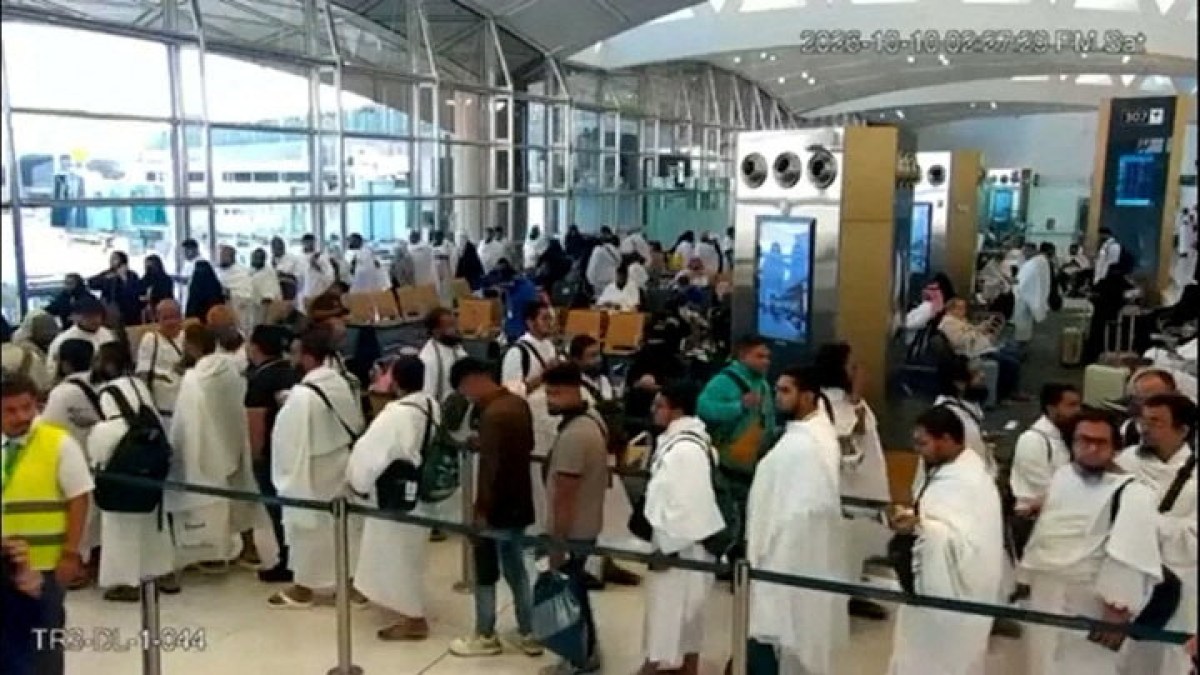
The attacks have emptied the skies over Riyadh. Authorities extended the suspension of operations at the city’s international airport, the second busiest in Saudi Arabia after Jeddah.
Lufthansa has cancelled all flights to Riyadh until October 16. Air France-KLM extended its previous suspension of services to and from the Saudi capital until the end of the month. The United Kingdom, France and Germany have warned their citizens to avoid Riyadh.
The disruption has come as Saudi Arabia hosts two major Saudi energy and investment conferences. Organisers of the World Petroleum Congress (WPC), which was set to bring top global oil executives and policymakers together from Sunday to Thursday, said it would proceed as planned. The Future Investment Initiative, launched by Crown Prince Mohammed bin Salman as the kingdom’s flagship investment conference a decade ago, would also proceed as planned from October 26 to 29.
Saudi Energy Minister Prince Abdulaziz bin Salman told the WPC that the kingdom’s resilience had been put to the test, while seeking to reassure attendees at the high profile conference that its response would be “equally serious”.
Saudi Arabia, which is preparing to host the 2032 FIFA World Cup, has long sought to market itself as a secure destination for major events, global tourism and investments.
Analyst expects more attacks
Hisham al-Omeisy, a conflict analyst and adviser at the European Institute of Peace, predicted the Houthis would escalate their attacks to include oil pipelines and energy facilities. He also expected them to continue striking airports because of the strong “public response” to hitting such targets.
“Houthis have escalated massively, they’ve crossed that line… they have their own frameworks, their own calculations and stopping at attacking a civilian airport is not one of those calculations,” al-Omeisy told Al Jazeera.
“They are a maximalist group and they’re there to do whatever they need to do to get to what they want,” the analyst said, including “more concessions from the Saudis”.
Sanaa is home to the only airport offering international flights to and from territory controlled by the Houthis, where the majority of Yemen’s population lives.
The broadcaster run by the Houthis also reported attacks on Thursday on Hodeidah International Airport on the Red Sea coast, without specifying the extent of the damage.
Yemeni representatives at the United Nations have claimed those airports are being used to shuttle Houthi delegations to and from Iran, which backs the group. According to the government of Yemen, the attacks have hit airport facilities to prevent Iranian flights from landing there.
The strikes and the suspension of flights have left Riyadh’s airport largely idle, with foreign carriers halting services and Western governments urging citizens to stay away. As fighting spreads around Mocha, Dhubab and Sanaa, the conflict is testing Saudi Arabia’s effort to present itself as a stable hub for global business and events.