
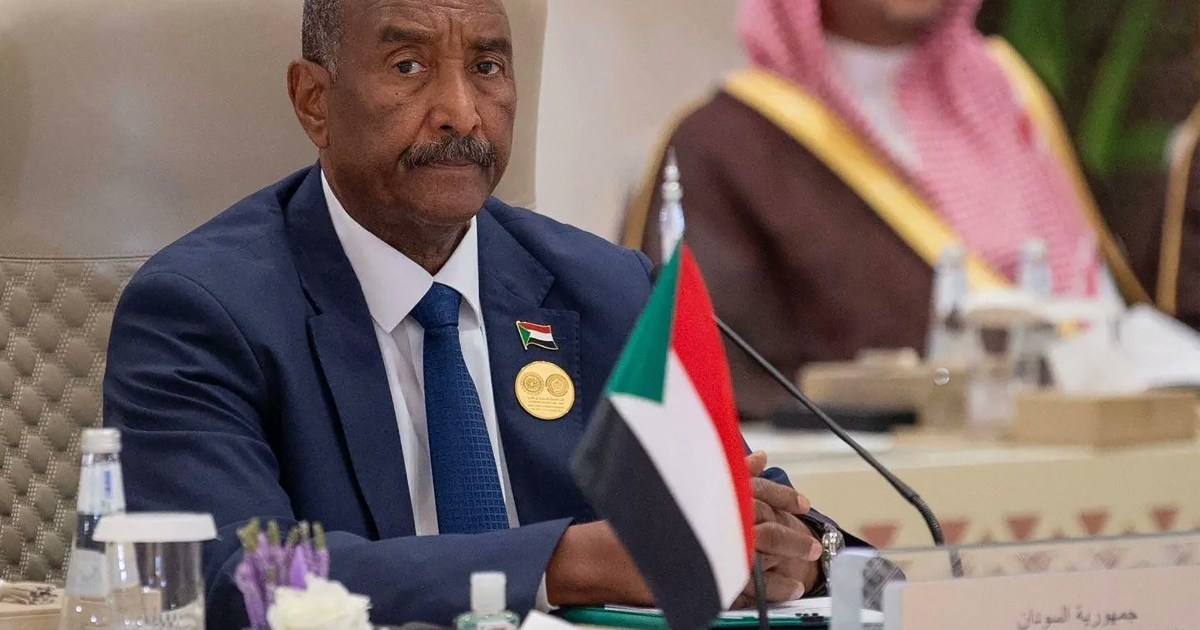
Sudanese army chief Abdel Fattah al-Burhan has offered temporary immunity and a package of legal, political and security protections to anyone joining a proposed national dialogue that would be run by an independent body. The announcement came early Saturday as he addressed a ceremony marking the 72nd anniversary of the Sudanese Armed Forces.
Al-Burhan, who heads the Sovereign Council and commands the army, said criminal cases against participants facing charges would be paused while they take part in the talks. He stressed that this step would not erase the rights of those who had filed complaints against them. The measure, he explained, was not a pardon but a temporary halt to criminal proceedings for dialogue participants, giving them limited immunity during the process.
He said the national dialogue should remain open ended and take place in a public setting where people can express opinions and criticism without fear or restrictions. He also promised legal protection for positions and opinions shared during the sessions, saying those statements could not later be used as a basis for prosecution.
According to al-Burhan, a group of Sudanese figures independently put forward the initiative and will oversee the dialogue. He said the state would not manage the process or set its agenda and outcomes. Sources told Al Jazeera that the national mechanism is expected to hold a news conference in the coming days to outline its vision and plans for the political process.
On the ongoing war, al-Burhan said the army is willing to engage with any serious peace effort, but he rejected what he called an “incomplete peace” that would restore the Rapid Support Forces and its leader, Mohamed Hamdan Dagalo also known as Hemedti, and its supporters to power. He said the army would continue what he described as “the completion of the cleansing of the country from the terrorist militia”.
He said the route to peace must begin with RSF fighters withdrawing from cities and assembling in designated areas, followed by the return of displaced people and refugees to their homes. After that, discussions could address the status of RSF fighters and the potential integration into regular forces of those who had not committed crimes.
Al-Burhan also said he had started talks with national forces that had backed the state and its institutions during the previous period, with the aim of involving them in completing government institutions. This would include representation in a legislative council, or parliament, whose formation is under discussion.
Meanwhile, a delegation from the African Union’s Peace and Security Council is expected to arrive in Khartoum on Saturday for a visit lasting three days, its second since the war began. The delegation includes representatives of the council’s 15 member states and is headed by Algeria’s representative, since Algeria holds the council’s rotating presidency for August.
According to Sudan’s Al-Muhaqiq news agency, the African delegation’s visit will last three days and include talks with al-Burhan, Prime Minister Kamil Idris, political groups and civil society organisations. In July, the African Union’s special envoy to Sudan, Mohamed Belaiche, discussed the political and security situation in Khartoum, African mediation efforts and the reopening of the African Union’s office in the capital.
Sudan has formally asked the council to lift its suspension from African Union activities, imposed after al-Burhan dissolved the Sovereign Council and cabinet and declared a state of emergency in October 2021.
Further details of the proposed dialogue are expected to emerge when the national mechanism holds its news conference in the coming days.


