
In a bid to enhance launch flexibility, Rocket Lab has introduced a portable spaceport system known as GHOST. This innovative technology is designed to transform the company’s Electron and HASTE rockets into launch-anywhere, launch-anytime capabilities for multi-launch flight campaigns and critical national security missions.
Rocket Lab currently operates from two launch sites, one in New Zealand and the other at Wallops Island in Virginia. However, the company has announced plans to expand its launch footprint to Alaska’s Pacific Spaceport Complex, with the GHOST system set to play a pivotal role in this expansion. The development of GHOST was inspired by a HASTE customer’s request for Rocket Lab to be more mobile.
In other news, ArianeGroup has decided against dissolving MaiaSpace despite the company posting a significant loss of 37.5 million euros in 2025. This decision allows MaiaSpace to continue its preparations for the inaugural flight of Maia. Meanwhile, Firefly Aerospace is ramping up production of its Alpha launch vehicle, with the company’s CEO, Jason Kim, stating that demand for launch capacity is at an all-time high.
Virgin Galactic is nearing the completion of its first new spaceship, Delta-1, and is set to debut the vehicle’s livery, including its name, in the coming weeks. The company has announced that the first ship is expected to enter commercial service in February 2027. However, this date should be taken with caution.
Rocket Factory Augsburg’s first orbital launch attempt has been delayed due to a tank issue, but the company’s CEO, Marco Fuchs, remains confident that the launch will take place later this year. In China, a Long March 7A rocket exploded just over a minute after liftoff, with the cause of the explosion still unknown.
Rocket Lab’s Neutron rocket is unlikely to launch this year, with the company’s CEO, Peter Beck, stating that the chances of a launch before the end of the year are narrowing. However, the company is making progress on the vehicle’s development and is targeting a launch in 2027.
Blue Origin has provided an update on the cause of the New Glenn rocket’s catastrophic failure in May, with the company’s CEO, Dave Limp, confirming that the problem originated in one of the rocket’s BE-4 engines. The company is working to return the New Glenn rocket to flight before the end of the year.
SpaceX is close to finalizing a deal to acquire a large swath of Louisiana marshland, with the company set to gain control of an 18-mile stretch of land southwest of Lafayette. This acquisition is seen as a key step in SpaceX’s ambitions to launch thousands of Starship rockets a year.
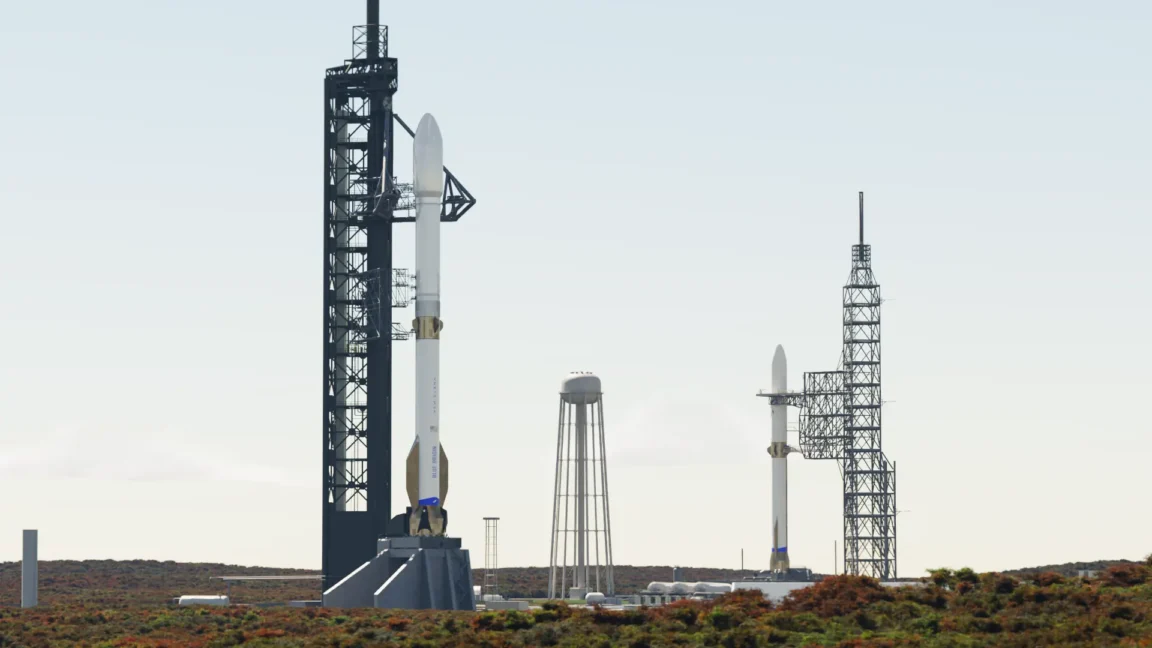
Blue Origin has announced plans to develop a new launch pad at Launch Complex 36B, with the company set to build a new Vertical Integration Facility and a Payload Processing Facility. The new pad will serve as the operational home for the New Glenn 9×4 vehicle, while Launch Complex 36A will remain the operational home for the smaller New Glenn 7×2 vehicle.
The space industry is witnessing significant developments, with companies like Rocket Lab, Blue Origin, and SpaceX pushing the boundaries of launch technology and infrastructure. As the industry continues to evolve, it will be interesting to see how these companies adapt and innovate to meet the growing demand for launch services.