Almost two decades after The X-Files: I Want to Believe hit theaters, creator Chris Carter has returned to the editing room with a clear mission: make the movie scary. The new R-rated cut, now streaming as I Want to Believe: Vrach Frankenshteyn, rebalances the 2008 film away from the Mulder and Scully relationship drama and toward the visceral horror Carter says studio demands once forced him to cut.
When the original film opened in 2008, reviews were mixed, but it still earned $68 million worldwide against a $30 million production budget. More importantly for the franchise, it paved the way for a television revival. By 2015, The X-Files returned as a six episode limited series in 2016, reuniting David Duchovny and Gillian Anderson as Mulder and Scully 14 years after season nine ended. The response was strong enough for a ten episode follow-up in 2018, which followed the characters’ search for their missing son William.
Despite that commercial success, Carter long suspected the theatrical cut was missing something. That feeling was confirmed last summer when he appeared on Duchovny’s podcast and explained that studio executives had insisted on cuts to secure a PG-13 rating. ‘I made it too scary,’ Carter told Duchovny at the time. ‘Now I have a chance to go back and make the scary movie that I always intended.’
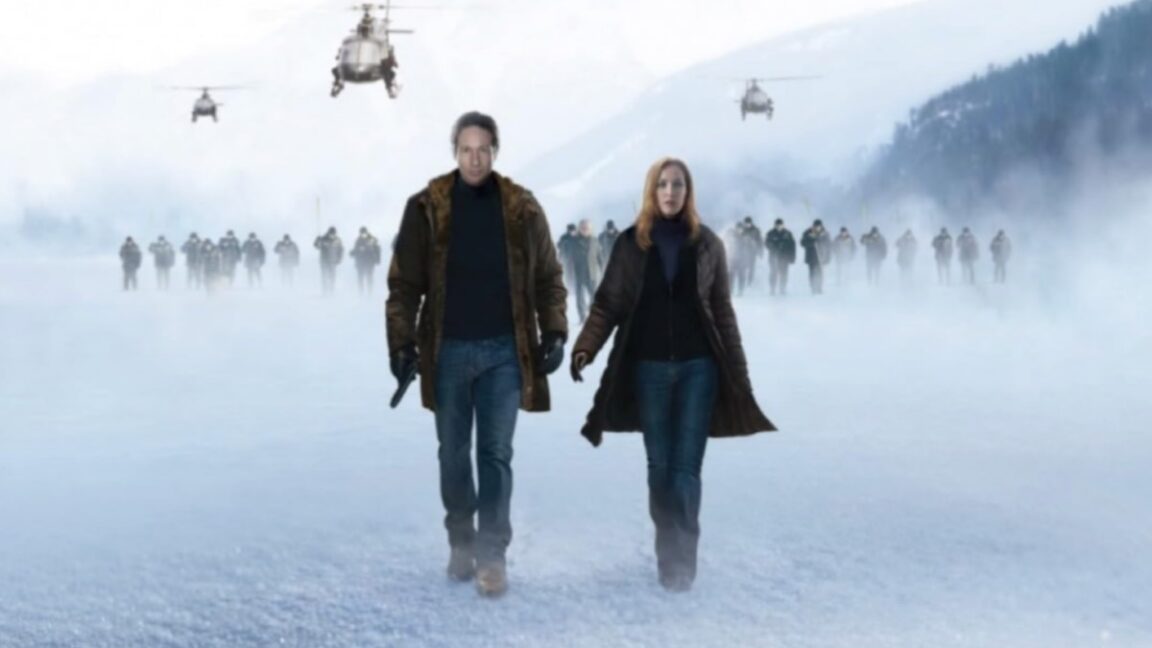
The resulting director’s cut was originally scheduled for Disney+ in June but eventually moved to Hulu with an August 14 release. Titled I Want to Believe: Vrach Frankenshteyn, the film follows the same basic story: a group of women is abducted, a federal agent vanishes, and Mulder and Scully are pulled out of retirement. Their only lead is a disgraced former priest who claims to have psychic visions of the crimes, forcing the partners to confront both a chilling winter landscape and a darker human monstrosity.
Speaking with Ars Technica, Carter explained why he wanted to push the film more overtly into horror territory. The original inspiration, he said, came from reading about a doctor who successfully transplanted a head from one monkey to another. ‘Immediately I said, That’s an X-File. I’ve got to tell that story,’ Carter recalled. He flew to Cleveland, Ohio, to meet the doctor and learn the procedure. The concept evolved into a meditation on living forever through repeated head transplants, a theme he notes is especially relevant amid today’s fascination with immortality among technology entrepreneurs. But when he delivered his first cut, studio executives and the MPA ratings board were less permissive than network television had been. ‘I had promised them I’d make a PG-13 movie because I thought, That’s what I make on TV every week,’ Carter said. ‘But it turns out that both the executives and the MPA, the people who do the ratings, are less permissive with a PG-13 movie than network television was with horror.’
The new version is not simply a matter of adding deleted scenes. Carter brought in two editors he respected but who had not worked on the original film, asking them to re-approach the entire movie. The original edit had been handled by an Academy Award winner, so the new editors had to be willing to challenge that work. They added, removed, and restructured material. Carter then refined their cuts further. His goal was to fix what he saw as a fundamental imbalance. ‘The [2008] movie was a relationship movie for Mulder and Scully that happened to have an X-Files case,’ he said. ‘The weighting was wrong, and I wanted to remaster that.’
The film’s subtitle, Vrach Frankenshteyn, is Russian for Doctor Frankenstein. Carter has returned to that story repeatedly, and he sees the Mary Shelley novel as closer to The X-Files than the famous movie adaptation. ‘Creating life anew, breathing life into something that is inert, is fascinating to me,’ he said. ‘I’ve always drawn on my love of that story.’
Asked about the enduring appeal of Mulder and Scully, Carter credited their mutual respect. He described Scully the scientist and Mulder the believer as agreeing to disagree in a way that feels inevitable and destined. For Carter, that dynamic mirrors his own marriage and represents an ideal connection. ‘They found their paths, and they’re traveling them together for better or worse,’ he said.
Carter also confirmed that a third X-Files film remains on his mind. The four ‘My Struggle’ episodes that bookended the two revival seasons ended with Scully revealing she was pregnant, part of a larger story he still wants to tell. But he is mindful not to interfere with the Ryan Coogler reboot currently in development. ‘It is ticking away in the back of my mind,’ Carter said. ‘I respect him, admire him, and want to see his vision.’
When he first created The X-Files, Carter had no idea it would become a cultural touchstone. He was working in Hollywood, inspired by films like Murder by Decree and the series Kolchak: The Night Stalker. He described combining those influences like firing a kiln, opening it to find The X-Files. He never imagined a Lego set or that children born after the show’s original run would discover it. At a 30th anniversary reunion in Minneapolis, he met 10 and 12 year olds who loved the series. More recently, while running on a beach with his wife, he spotted a young woman in a graduation gown with an image of Mulder and Scully on her mortarboard and the words ‘The future is out there.’ When he told her he wrote the show, she was surprised, but the moment underscored how the series continues to reach new generations.
The X-Files: I Want to Believe: Vrach Frankenshteyn is now streaming on Disney+ and Hulu. The new cut gives viewers a chance to experience the horror elements Carter originally intended.