
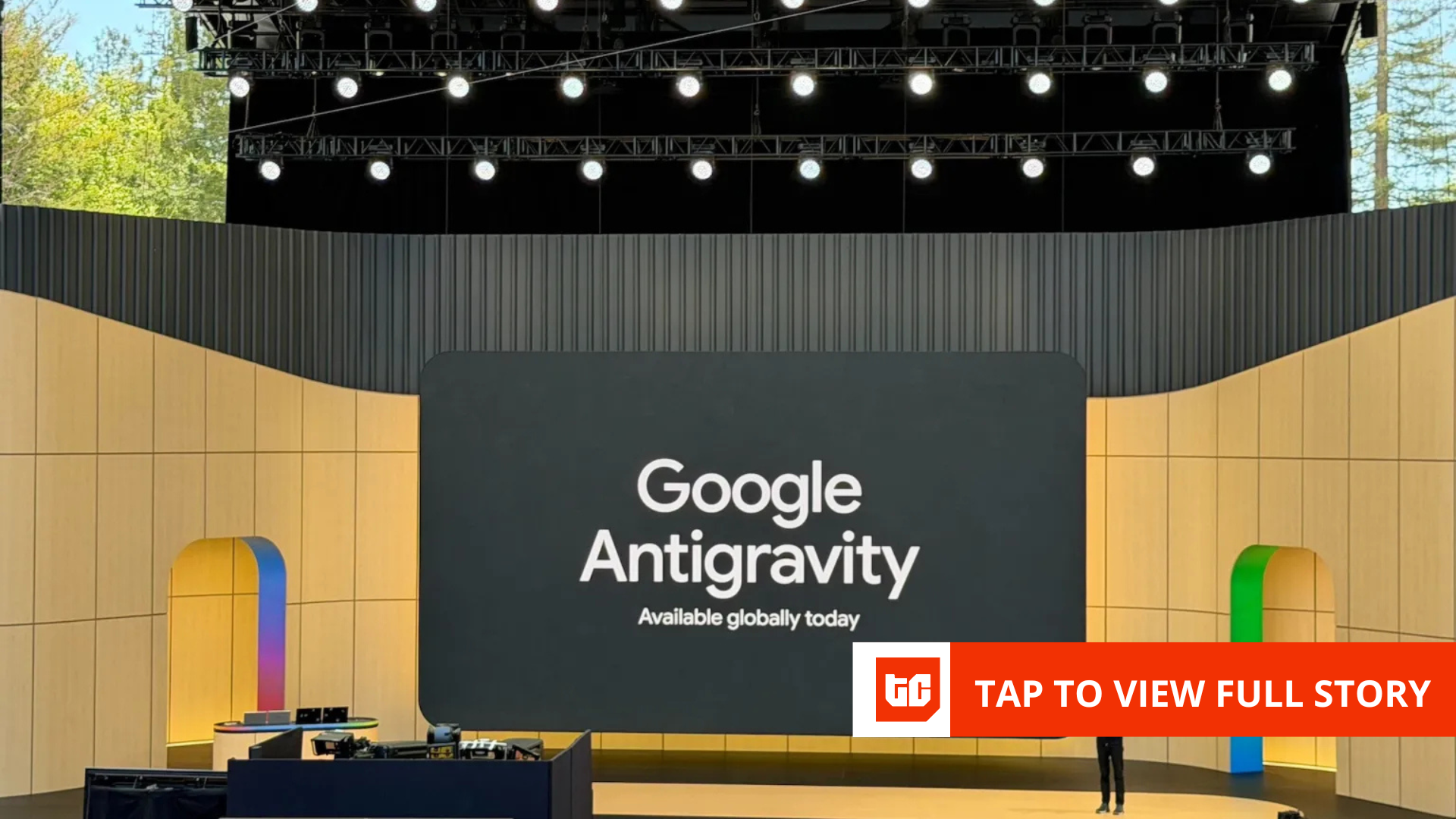
AI coding assistants have grown skilled at generating code, fixing errors, and explaining complex codebases. Google, however, is pushing its AI to take on a much bigger role in software development with Antigravity, an agentic platform designed to handle multi-step tasks with minimal human input.
Antigravity is Google’s agentic development platform, built to let AI agents handle complex coding and knowledge-work tasks. These agents can use tools, work with files, search the web, delegate parts of a task to other agents, and keep working without needing constant instructions from a developer.
Google introduced Antigravity in November 2025 as an AI-powered development environment. Since then, it has grown into a broader ecosystem that includes Antigravity 2.0, the Antigravity IDE, CLI, and SDK.
The core idea is simple: instead of using AI only for individual pieces of code, developers can assign larger objectives to agents and then supervise the work they produce.
To understand the difference, compare Antigravity with a traditional coding assistant. A typical assistant might suggest code, explain an error, or generate a function on request. An agentic platform works at a higher level. You can give an agent a broad objective and let it plan, use tools, execute commands, and work through multiple steps on its own.
Google describes Antigravity as a platform built for the agent-first era. Its agents can read and write files, execute system commands, run web searches, interact with Chrome, and create artifacts and implementation plans.
How Antigravity agents work
The biggest difference with Antigravity is the level at which you interact with the AI. Instead of asking an agent to write one function, you can give it a broader task and allow it to determine the steps required to complete it.
Agents can use tools to execute commands, read and write files, search the web, interact with Chrome, and work with external services through skills and MCP servers. This changes the relationship between developer and AI. The developer does not have to specify every step. They can describe the desired outcome and let the agent figure out the rest.
Antigravity 2.0 supports dynamic subagents, which let a main agent create specialised agents for particular parts of a task. These subagents can work in parallel, with workspace isolation keeping their work separate. Google says this allows larger tasks to be split into smaller pieces while preventing multiple workstreams from clogging the main agent’s context.
In practical terms, instead of one agent doing everything sequentially, it can delegate focused pieces of work to other agents.
Background tasks and scheduled automation
Antigravity also supports asynchronous task management. Long-running operations can be moved into background processes so they do not block the agent’s active work. Subagents can run as background tasks while their progress streams back to the main agent.
Antigravity 2.0 includes Scheduled Tasks, allowing users to set recurring schedules that automatically trigger agents to perform predefined tasks. Google offers examples like daily pull-request digests, hourly checks on live deployments, and monthly reports on system architecture changes.
This takes Antigravity beyond a manual AI tool. Once configured, the agent can run automatically on the schedule you set.
Artifacts: seeing what agents actually do
One of the most important parts of Antigravity is Artifacts. These are outputs that agents create to show their work and progress to the user. They can include implementation plans, rich documents, diagrams, images, browser recordings, and other evidence of what the agent has done.
Artifacts matter because handing more work to an AI agent creates a new problem: how do you know what it actually did? Artifacts give users something to inspect instead of relying only on a final answer. Google built Antigravity around this idea, letting users review the work and provide feedback directly.
Gemini integration and pricing
Antigravity is closely integrated with Google’s Gemini models. The current platform highlights Gemini 3.7 Flash, introduced in August 2026 as the workhorse model for coding and agentic tasks. Google says the model shows notable gains over its predecessor, Gemini 3.6 Flash, on coding benchmarks, with introductory pricing at roughly half the cost per token.
Antigravity is not just a model, however. The model provides the underlying intelligence, while the Antigravity agent harness provides the environment, tools, permissions, and other capabilities that let an agent carry out multi-step work. It is a platform for deploying and managing agents, not simply another chatbot powered by Gemini.
Why it matters for developers
The larger shift is from AI that helps developers write code to AI agents that can take on bigger pieces of work. Traditional development requires developers to decide what needs to be done, write or modify code, run tests, investigate problems, and repeat the process. Agentic development changes that balance.
Developers can increasingly describe an outcome and let an agent handle more of the execution. The developer then becomes responsible for directing the work, reviewing results, and making decisions that require human judgment. This does not mean developers disappear. Their role shifts from manually carrying out every step towards orchestrating, supervising, and reviewing AI agents.
Google is clearly positioning Antigravity around that shift, describing the platform as a way to work in the agent-first era and expanding it beyond coding into broader knowledge work.
Controls and availability
Antigravity is designed for autonomous and asynchronous work, but that does not mean users should blindly hand over control. Google has built permission and security controls into the platform. For example, Antigravity’s default settings require interactive approval before agents run terminal commands, while access to files and other resources can be restricted through project-level permissions.
This is important because greater agent autonomy creates greater risk. An agent that can modify files, execute commands, or interact with external tools needs boundaries. Antigravity combines autonomy with controls that let users decide what agents can access and do.
Google currently lists Antigravity as available at no charge for developers under its “Individual” plan. That is framed as public-preview pricing, however, and usage quotas have been adjusted more than once since launch. The company also offers paid Google AI plans with higher usage limits and priority access.
Antigravity 2.0 works on Windows, macOS, and Linux. The free availability is significant because it lowers the barrier for developers who want to try agentic development without immediately committing to a paid platform.
Google Antigravity matters because it captures a major shift in software development: the move from AI as an assistant to AI as an agent that can take on larger pieces of work. Antigravity 2.0 gives users a command centre for managing those agents, while the wider ecosystem adds a terminal interface, a programmable SDK, and a dedicated agentic IDE. The challenge now is no longer whether AI can generate code, but whether developers can direct, supervise, and trust agents executing increasingly complex work. That is what makes Antigravity worth watching.


