
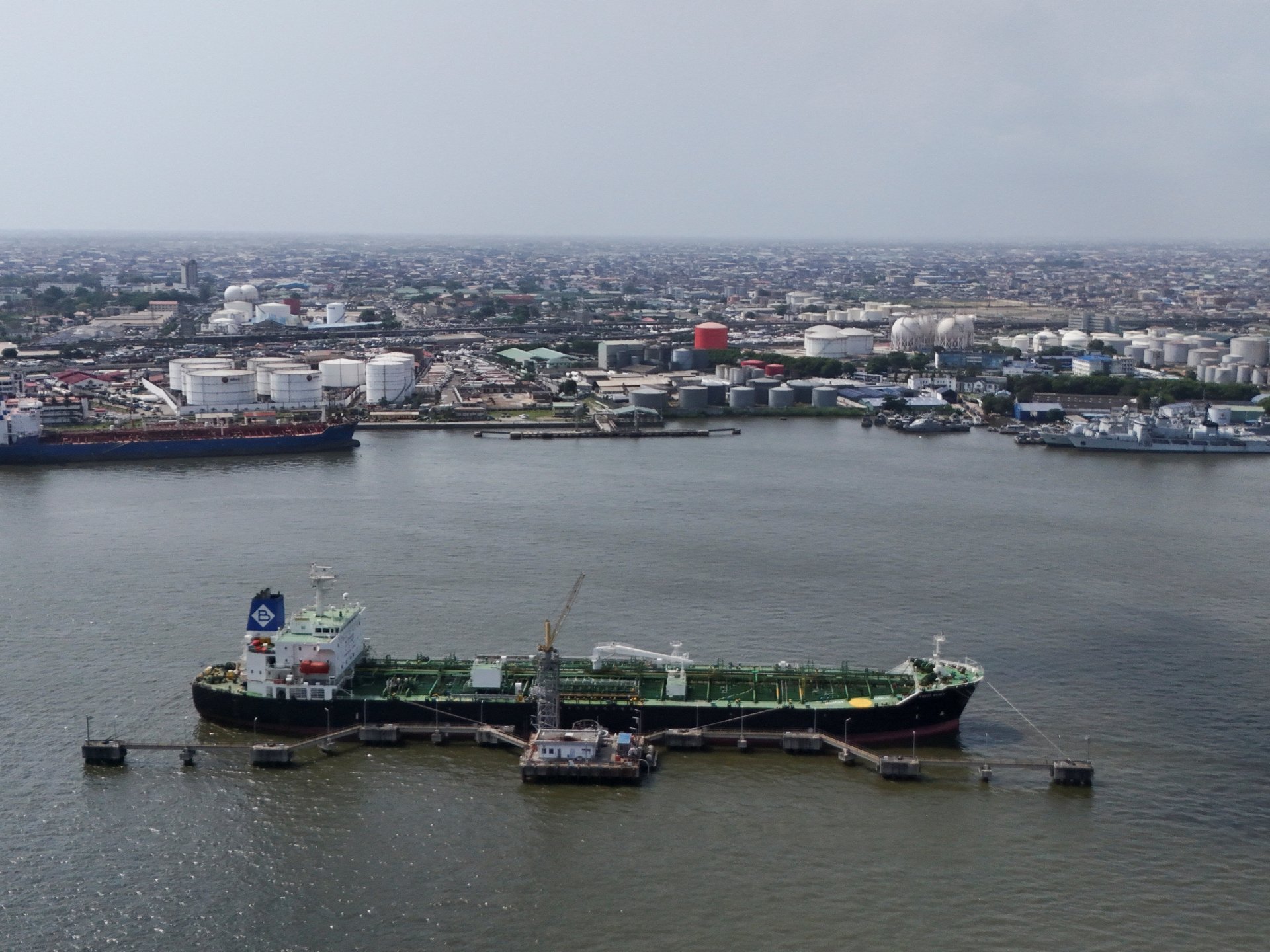
The ongoing disruption of maritime traffic through the Strait of Hormuz has dealt a serious blow to African economies, even though the continent is rich in energy and other resources. But one analyst argues this crisis could become the catalyst for Africa to finally escape the periphery of global geopolitics.
In an opinion piece published by Al Jazeera, the author contends that the world is entering a “post-Hormuz era”, a period no longer defined by a single maritime chokepoint. Four years ago, the Russia-Ukraine war had a similar impact on African economies. Now, the author argues, Africa has a unique opportunity to reverse its fortunes and create its own geopolitical context.
Overcoming thalassophobia
The first step in this transformation, according to the writer, is a collective push to overcome what they call “thalassophobia”: a historical tendency among African states to see the sea primarily as a boundary rather than as a space for economic, political and military projection. For decades, Africa’s strategic imagination has been dominated by terrestrial threats: wars of national liberation, civil conflicts, insurgencies, coups d’etat and border disputes. The sea remained peripheral not only in public policy but also in the strategic culture of the elites. This legacy, the author says, explains why Africa produced abundant reflection on land security but far less on maritime power, the blue economy, oceanic corridors or naval projection.
Why Africa remains fragmented
The author also argues that African states are often afraid of collectively assuming the political, financial and institutional costs of a common continental strategy. They prefer fragmented national responses over an integrated vision of the African space. The reasons are structural, not merely circumstantial.
First, the primacy of sovereignty. African states inherited colonial borders and made territorial inviolability the founding principle of the post-independence order, enshrined in the Organisation of African Unity in 1963 and later in its successor, the African Union. A common maritime strategy, however, would require sharing sovereign prerogatives: jurisdiction over exclusive economic zones, rules of engagement, joint commands and the surrender of sensitive intelligence.
Second, the heterogeneity of interests. Africa has several maritime frontages where threats differ: piracy and crude oil theft in the Gulf of Guinea, illegal fishing and trafficking in the Western Indian Ocean, and migratory flows in the Mediterranean. Forging a single agenda from such divergent priorities is arduous, and fragmentation becomes the path of least resistance.
Third, cost and capability. Building maritime capabilities, including naval, coastguard, surveillance, intelligence and logistical assets, is extraordinarily expensive, and few states can sustain them. Because maritime security is a collective good, the classic collective action problem sets in: each state waits for others to bear the burden.
Fourth, the outsourcing of security. The permanent presence of foreign navies in African waters, under international missions, military bases or bilateral agreements, supplies maritime security. This functional dependence discourages the building of endogenous capacity.
Fifth, elites benefit more from bilateral relations with external powers than from regional integration, so political and financial rent flows from the outside in.
Finally, insurrections, border disputes and internal security absorb budgets and attention, relegating the sea to a priority forever postponed. As a result, the sea remains politically invisible in Africa; it acquires centrality only when an international crisis reminds states of their dependence on global maritime corridors.
The post-Hormuz concept and Africa’s resources
Africa’s vast strategic resources, including oil, natural gas, minerals critical to the energy transition and a geographical position linking the Atlantic, Indian Ocean and Mediterranean, do not translate into geopolitical autonomy. To escape this conundrum, the author argues, Africa must construct its own geopolitical context. This means defining continental priorities in maritime security, infrastructure, energy, value chains, industrial integration, foreign policy and, above all, strategic autonomy.
The concept of the “post-Hormuz era” acquires density here. It denotes the passage from a geopolitical system dominated by a single energy chokepoint to a polycentric system in which global economic security is determined by the articulation of several strategic corridors: Hormuz and Bab al-Mandeb, the Red Sea, the Suez Canal, the Mozambique Channel, the Cape of Good Hope, the Western Indian Ocean and eventually the Arctic. In this network of interdependent corridors, Africa occupies a central position.
The continent is not lacking maritime strategies on paper. The African Union adopted the 2050 Africa’s Integrated Maritime Strategy in 2014 and the African Charter on Maritime Security and Safety in 2016. Yet the former remains largely unimplemented, and the latter still awaits the number of ratifications required for its entry into force. What Africa needs, the author says, is the geopolitical consciousness to translate these documents into practice. The distance between the strategy proclaimed and the strategy lived is, precisely, the measure of strategic thalassophobia.
Building geopolitical consciousness
Building this consciousness implies changing the way political elites perceive the sea. As long as it continues to be understood chiefly as a frontier, an export route or a space for external intervention, the political will to invest in maritime capabilities is unlikely to emerge. The first transformation is intellectual: to recognise that the sea has ceased to be a periphery and has become one of the principal spaces for the affirmation of African power. This means inscribing maritime ambition into institutions, budgets and command structures.
As for leadership, the author says it would be illusory to expect it exclusively from the African Union as a continental bureaucracy. The realistic impulse would come from a coalition of anchor states with maritime weight and political will, such as South Africa, Nigeria, Egypt, Morocco, Kenya, Angola and Senegal, acting through regional economic communities and specialised mechanisms. A precedent exists: the Yaounde Architecture, created by the states of the Gulf of Guinea, established coordination and information sharing centres that helped reduce piracy in the region. It is a functional, endogenous and replicable model that should be extended to the Western Indian Ocean and the Mozambique Channel.
Six priority policies
The author outlines six priority policy lines. First, ratify and operationalise the instruments that already exist. Second, build shared maritime domain awareness through common surveillance, fusion of satellite and radar intelligence, interoperable coastguards, joint patrols and agreements allowing agents of one state to embark on vessels of another. Third, resolve the question of financing by creating an African maritime security fund anchored in the continent’s own resources and the African Development Bank, so as to break dependence on external donors. Fourth, articulate the maritime effort with the African Continental Free Trade Area, treating ports and corridors as the physical backbone of integration. Fifth, strengthen energy resilience by developing refining capacity and strategic storage, so that producers cease to export crude and import refined products vulnerable to disruptions at chokepoints. Sixth, invest in the sea’s human and industrial capital: maritime academies, hydrography, ship repair and shipbuilding, African flag registries and a maritime insurance of its own, to capture value that today escapes the continent.
Geopolitical consciousness becomes real, the author concludes, when it translates into funded institutions, executed budgets and operational commands, not into one more document awaiting ratification or financing.
The post-Hormuz era is not a threat for Africa; it is perhaps its greatest window of opportunity. The decisive question is no longer whether Africa will occupy a place in the new world geopolitics, because that place exists by the force of its geography and resources. The real question, according to the author, is whether the continent will possess the strategic vision to occupy it as the subject, not the object, of history. The views expressed in this article are the author’s own and do not necessarily reflect Al Jazeera’s editorial stance.