
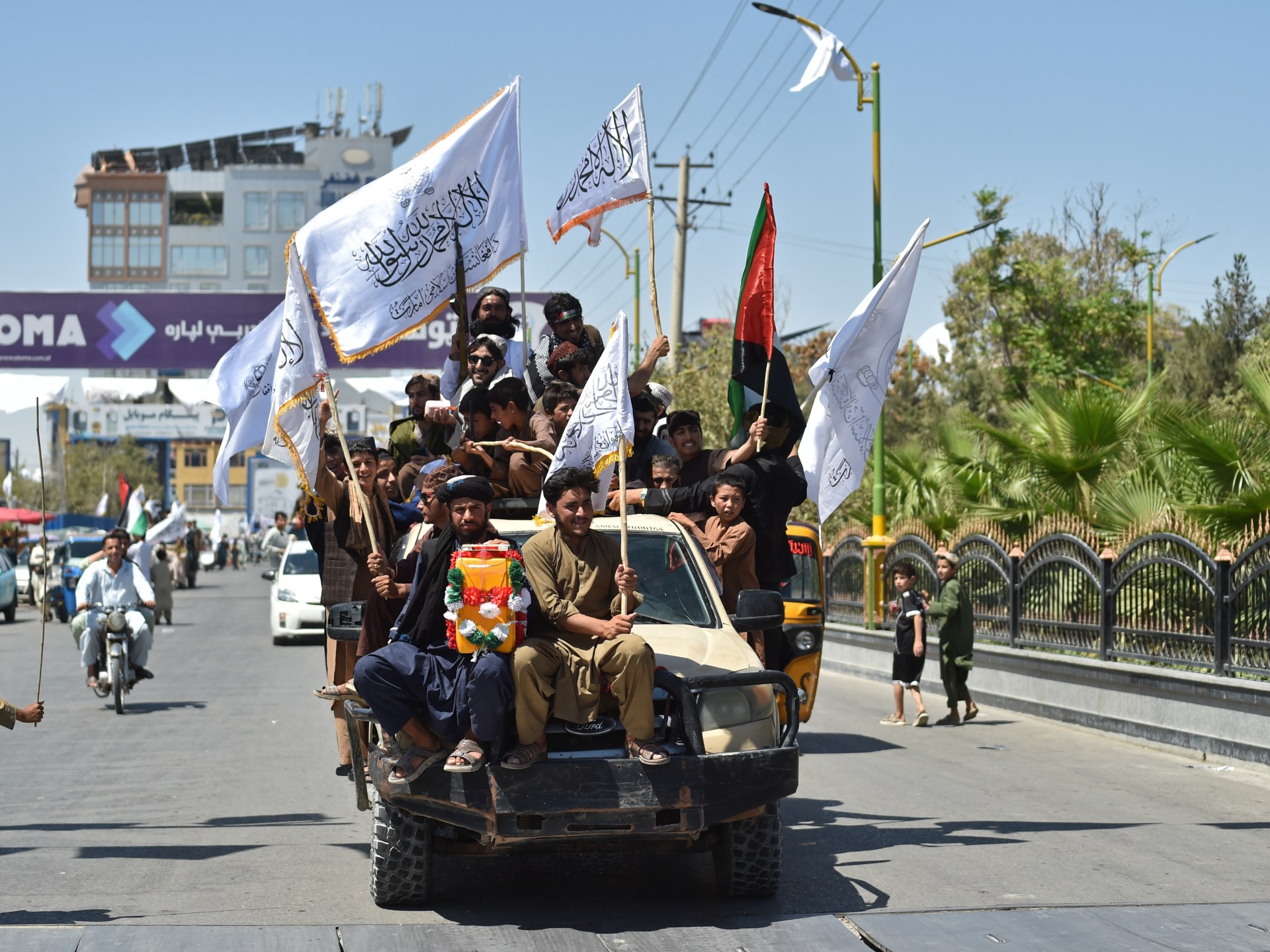
Thousands of Taliban supporters flooded central Kabul on Saturday, waving white banners and chanting religious songs as authorities marked the fifth anniversary of the group’s return to power, even as many residents stayed away and questioned what the past five years have brought.
Convoys of cars and pick-up trucks decorated with Taliban banners rolled through the streets toward a main gathering outside a compound housing key ministries. Heavily armed fighters took up positions around the area as senior officials addressed the crowd, praising what they called the “victory of the Islamic Emirate” and promising to continue enforcing their vision of governance.
The anniversary marked five years since the Taliban swept into Kabul and brought down the Western-backed republic, following the withdrawal of foreign troops and the collapse of the previous government in August 2021. Leaders used the occasion to claim credit for restoring security and national sovereignty, pointing to the absence of large-scale fighting since that time.
Officials repeated longstanding demands for international recognition, arguing that engagement, rather than sanctions and isolation, is needed to stabilise the country. Yet Afghanistan’s economy remains fragile. Billions of dollars in state reserves remain frozen abroad, banking restrictions have squeezed businesses, and aid agencies warn that millions of Afghans still rely on humanitarian assistance to survive.
Many Kabul residents who stayed away from the rally said unemployment, rising prices and shrinking freedoms overshadow any sense of security they may feel. For them, the anniversary was a reminder of what has been lost as well as what has changed.
At the gathering, however, a different narrative emerged. Supporters credited the Taliban with ending what they see as foreign occupation, reducing crime and keeping major roads open. They described the anniversary as a moment to celebrate a governing system finally free of external interference, even as the country remains divided over what that system has delivered and what it has taken away.
That division is sharpened by staggering social costs. UNESCO estimated that 2.4 million girls have been excluded from secondary education. The World Food Programme said child malnutrition has reached critical levels in a third of Afghanistan’s provinces and is expected to worsen because of funding shortfalls.
In a country where security and hardship coexist uneasily, the fifth anniversary laid bare the gap between the Taliban’s claims of success and the daily realities facing many Afghans. For every supporter celebrating in Kabul, there are families elsewhere confronting closed schools, empty shelves and an uncertain future.


