
The idea of Syrian intervention in Lebanon has been floated by US President Donald Trump, aiming to disarm Hezbollah. However, for Damascus, the potential costs and risks of such an intervention far outweigh any possible benefits.
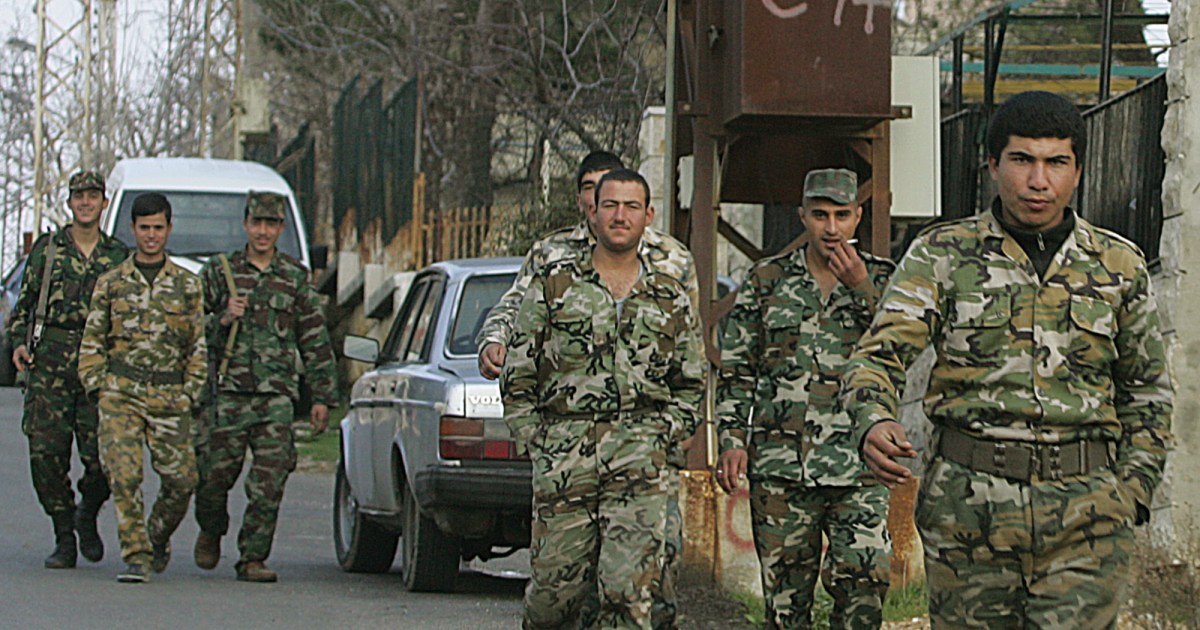
Syrian soldiers walk along a street in the hills above the mountain resort of Aley, Lebanon, on February 25, 2005. The prospect of Syrian intervention in Lebanon has been raised by US President Donald Trump, with the goal of disarming Hezbollah. But for Damascus, the potential costs and risks of such an intervention are significant.
Any intervention would likely strengthen Hezbollah politically, destabilize both countries, and expose Syria to Iranian retaliation. The Syrian army is still in the process of unifying factions and organizing command, armament, and deployment, making a broad operation challenging. The state faces internal security and economic challenges, and opening an external front risks draining key state resources.
The Syrian armed forces can carry out limited operations along its borders, close smuggling routes and tunnels, and prevent armed groups from infiltrating. However, they would face difficulty holding areas inside Lebanon or managing a war of attrition in populated environments. Entering Lebanon may be easier than defining the conditions for leaving it, especially if withdrawal becomes linked to a political settlement which Damascus cannot alone secure.
Nor is there any guarantee that the confrontation would remain inside Lebanese territory. Iran can retaliate through allied groups in Iraq, targeting Syrian military sites, using drones and missiles, or carrying out security operations that exhaust Damascus without declaring war. The possibility of direct Iranian bombardment cannot be ruled out, either.
Syria would risk undoing much of the work done in building a new unified armed force. Any military failures in Lebanon could strengthen factional loyalties within the Syrian army and give field commanders influence independent of the central leadership. The hostility many Syrians feel towards Hezbollah does not mean they would accept fighting a war inside Lebanon that serves American or Israeli objectives.
Syria could also risk its international standing if it were to intervene in Lebanon. Without an official request from the Lebanese government, the entry of Syrian forces would be considered a violation of sovereignty and would evoke memories of the Syrian military occupation that lasted from 1976 until 2005.
Bringing back recollections of that period could change the very nature of the conflict in Lebanon. Instead of the internal Lebanese debate remaining focused on the legitimacy of Hezbollah’s armament and the state’s monopoly on force, the centre of controversy would shift to the presence of Syrian troops on Lebanese territory.
A more realistic option remains an operation inside Syrian territory, which would involve controlling the border with Lebanon, closing smuggling routes and tunnels, preventing the movement of weapons and fighters, and exchanging information with the Lebanese army. This option is less risky and more sustainable, preserving Lebanese sovereignty and the responsibility of Lebanese institutions in addressing the disarmament file.
In conclusion, a direct Syrian military intervention in Lebanon remains an unlikely possibility due to the potential costs and risks involved. The situation could change if there is an official request from Lebanon and a broad regional understanding that provides the operation with political, legal, and military cover.


