President Donald Trump has threatened to declare the Strait of Hormuz a US territory, a move experts say would be legally impossible. The president’s remarks on Friday came as the strategic waterway, through which about a fifth of global oil and gas passes, remains at the center of a military and diplomatic standoff between Washington and Tehran.
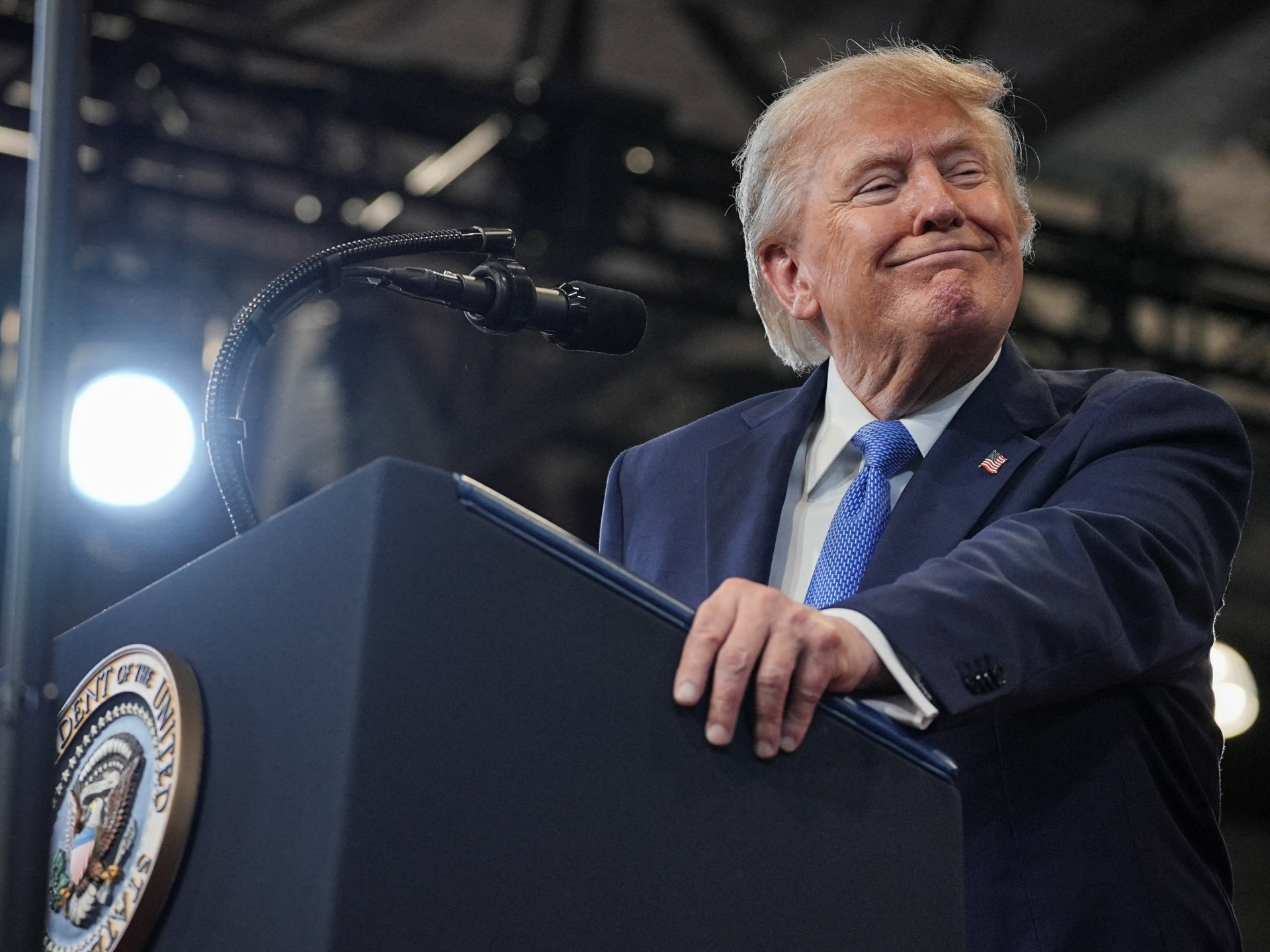
Speaking at a police academy in New York on Friday, Trump said that once Iran is defeated, he would soon designate the strait a US territory. “After we finish defeating Iran, which is being very badly defeated, pretty soon I’ll be declaring the Hormuz Strait a territory of the United States,” he said.
He then suggested the move was already in effect. “Essentially, that’s what it is. We have the blockade. No ships get through unless we want them to,” Trump said.
The remarks come as the June memorandum of understanding signed between Washington and Tehran expires on Sunday. Iran has blocked passage through the strait to use it as a kind of kill switch for the global economy, while the United States has imposed a naval blockade on Iran’s ports. The war between the two countries began on February 28, and Trump has repeatedly threatened to attack Iran, only to pull back at the last moment. Iran maintains it controls the waterway, and some vessels have still transited the strait despite the blockade, according to maritime navigation data.
Tehran fires back
Al Jazeera’s Kimberly Halkett, reporting from Washington, DC, said Trump did not seem to take his own statement seriously. “It’s clear the US president, with a chuckle as he said that, even himself, is not taking this particularly seriously,” she said. “These are the territorial waters of Iran and Oman. But what the US president likes to do is get under the skin of adversaries, and, in this case, it’s Iran.” She added that the naval blockade is ongoing.
Iranian officials reacted sharply. The head of the judiciary called Trump a criminal and feather-headed, described his remarks as “nonsense” and insisted the strait belongs to Iran. Iran’s deputy foreign minister, Kazem Gharibabadi, said: “The Strait of Hormuz cannot be seized by tweet, nor by aircraft carrier, nor by issuing an order, nor by an election speech.” He went on: “The Strait of Hormuz has been Iranian, is Iranian, and will remain Iranian; this strait will only be closed and opened under Iran’s command, and as long as you do not accept the reality of defeat and cease your fanciful delusions, Iran will continue to enforce the blockade.”
Iran has also been holding talks with Oman, the only other coastal state along the strait, to reach an agreement on managing maritime traffic. Foreign Minister Abbas Araghchi, in comments carried by the Iranian Students’ News Agency, said negotiations with Muscat “may reach a conclusion soon.” But he added that reopening the waterway is a separate issue, for which Washington must abide by promises in the June memorandum of understanding, including lifting the naval blockade and sanctions on Iran. That represents a shift in Tehran’s position: it now wants those concessions merely for reopening the strait, whereas they were originally conditions for ending the war.
Legal and political hurdles
Sovereignty is not transferred by a unilateral presidential proclamation. Trump earlier threatened to send US troops to Iran’s Kharg Island, the Gulf’s key Iranian oil export hub. Tehran responded that its Islamic Revolutionary Guard Corps would be waiting “with fingers on the trigger.” Trump has also previously threatened to take over Greenland, an autonomous territory of Denmark.
Bruce Fein, associate deputy attorney general under President Ronald Reagan, said Trump is constitutionally powerless to annex territory on his own. “A treaty ratified by the Senate or statute is constitutionally required to annex territory, as with the Louisiana Purchase or annexation of Hawaii or Panama Canal or acquisition of Puerto Rico or the Philippines in ending the Spanish-American War,” Fein said. If he went ahead, Fein said it would “constitute the crime of aggressive war under international law, including the UN Charter.”
Natalie Klein, an international law specialist and associate dean at the University of New South Wales in Sydney, said the only way Trump’s claim could have any plausibility under international law would be if the US were acting as an occupying power, comparable to the US in Japan after World War II. “But in that scenario, the US would need to have military control over Iran or at least its coastal areas,” she said.
The war is also widely unpopular in the US. Republicans are trying to defend their narrow congressional majorities in November’s midterm elections, and barely 35 percent of Americans approve of the war, according to a Reuters/Ipsos poll. Multiple US media reports have said Washington is running short on munitions, including the crucial Patriot antimissile interceptor. Petrol prices have risen to an average of more than $4 a gallon, a major issue for American voters. Last week, Vice President JD Vance said the administration’s top priority in the war was controlling petrol prices, with stopping Iran’s supposed race to a nuclear weapon now second.
Tehran has also attacked neighbours in the Gulf. Analysts say the goal is to pressure regional countries into pushing Washington into a corner at the negotiating table.
Under international law, including the UN Convention on the Law of the Sea, Iran does not enjoy unfettered sovereignty over the entire strait. The convention recognises coastal state sovereignty over territorial waters but limits that territorial sea to 12 nautical miles (22km) and says ships enjoy a right of passage that “shall not be impeded.” The Strait of Hormuz lies in international waters between Iran and Oman. At its narrowest point it is only about 21 nautical miles (39km) wide, which means the two countries’ territorial seas overlap. Neither the US nor Iran has ratified UNCLOS, but its rules on international straits are widely regarded as customary law.
Paul Musgrave, an associate professor of government at Georgetown University in Qatar, said Trump typically makes such statements to speak to a US audience, especially his support base. “This is a guy who speaks big. You have to take him seriously in some cases but not literally,” Musgrave said. He cautioned that in this case Trump cannot be taken seriously because making the strait US territory is physically and legally impossible. But the statements do show that Trump is determined not to back down from Iran and accept defeat in the months-long war, he added.
Trump’s threat may be legally impossible and dismissed by Tehran as nonsense, but it reflects a deeper standoff over a waterway that moves a fifth of the world’s oil and gas. For now, the strait remains a flashpoint where rhetoric and realpolitik collide.