
The White House has replaced a 2013 policy on space transportation with a directive that calls for new launch and reentry facilities on federal land, responding to a launch industry that made nearly 10 times more orbital attempts from U.S. soil last year than in 2013.
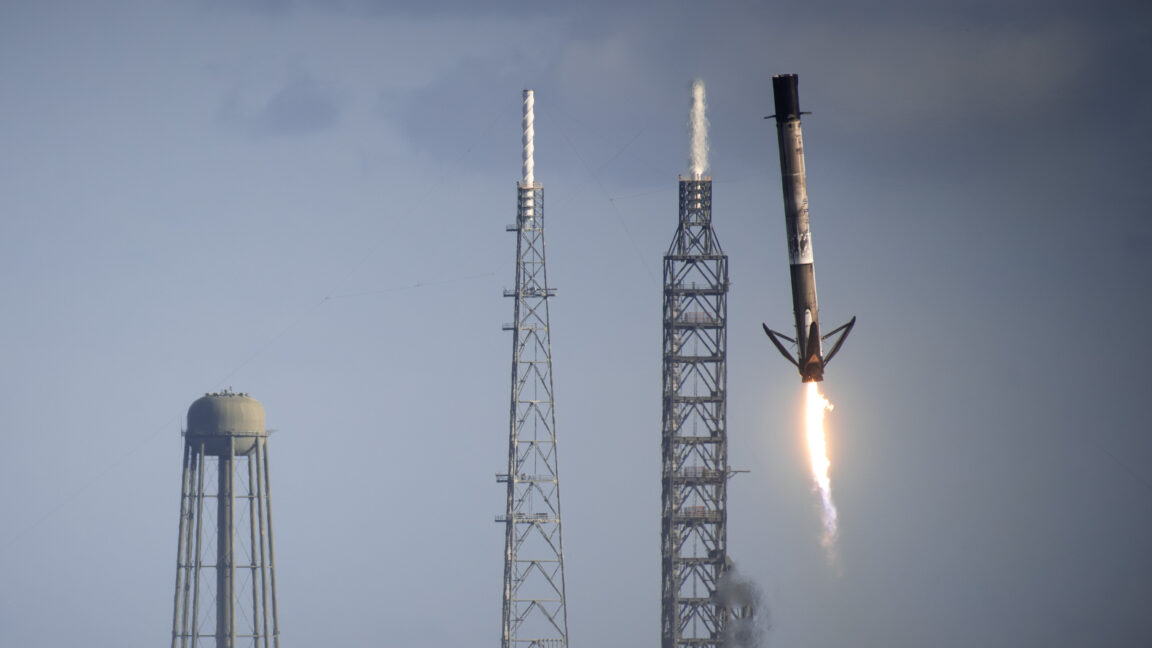
President Trump’s memorandum supersedes a 2013 policy issued by former President Barack Obama. Both documents emphasize support for the commercial space industry and the importance of assured access to space, but the launch sector looks vastly different today. There were 176 orbital launch attempts from U.S. soil last year, nearly 10 times the 2013 total. SpaceX alone conducted 165 orbital launches of its Falcon 9 rocket and five suborbital test flights of the much larger Starship vehicle.
“By 2030, our space transportation ranges must grow to support more than 1,000 launches and reentries every year,” the policy states. “The policies set forth in this memorandum will secure America’s continued superiority in space.”
The projected surge is driven by commercial and military demand for communications services, overhead surveillance, space based targeting, and orbital data centers.
The most notable updates focus on expanding the nation’s capacity to handle that growth. The administration directs the Pentagon and NASA to “prioritize and coordinate on infrastructure investments” to improve launch and reentry capacity and flexibility at federal ranges.
Those federal spaceports are Cape Canaveral Space Force Station and NASA’s Kennedy Space Center, which share adjacent property in Florida, plus Vandenberg Space Force Base in California and NASA’s Wallops Flight Facility in Virginia. Only the Florida and California locations are currently equipped for heavy lift launches.
The policy also supports more efficient range scheduling at federally owned spaceports, balancing the needs of commercial users and government missions. It instructs the military and NASA to “regularly publish range schedules to ensure transparent allocation of resources and optimize launch capacity.” Today, schedules for most launches are not public until a few days or weeks in advance.
The administration will identify potential sites for additional launch facilities across the country, improve how launch and reentry operations are integrated into airspace and air traffic control modernization efforts, and designate “priority airspace for critical space launch corridors.”
More specifically, the White House is directing the Interior Department to find federal lands that could serve as an additional designated federal land reentry site. The move follows a request for public comment issued last month by the Bureau of Ocean Energy Management about using submerged lands and abandoned offshore oil rigs for sea based launches and reentries.
That portion of the directive appears to endorse findings from a recent Pentagon study, which concluded the government needs a third heavy lift launch site. The report has not been released, but Air Force Secretary Troy Meink described its conclusion in a May hearing before the House Armed Services Committee.
“At a high level, what it says is we probably need another site that’s capable of heavy and super heavy launch capability, both from a resiliency perspective and just, even at the Cape, limitations on how much space we’ve got,” Meink said.
Gen. Chance Saltzman, the Space Force’s top general, echoed that view during the same hearing. “We’re going to have to increase the capacity,” he said. “And then, maybe connected to that, is the geographic resiliency that you might need to have separate launch locations and not be so tied to just the two specific launch ports that we have.”
The policy also calls for more responsive launch operations, including the ability to place high priority payloads into orbit within 48 hours of a need, potentially from “expeditionary locations” far from conventional ranges. Rocket Lab and Astra are among the companies already developing portable launch infrastructure.
The memo backs NASA’s ongoing efforts to develop commercial transportation to and from the Moon and directs the agency to support future commercial robotic and human missions to Mars.
Additional provisions that the government has already begun pursuing include expanding commercial access to federal ranges, accelerating permitting and environmental reviews, and charging user fees to commercial companies launching from NASA or military spaceports.
The new policy signals an effort to treat space launch ranges as a strategic asset that must grow in step with the rapid expansion of the industry.


