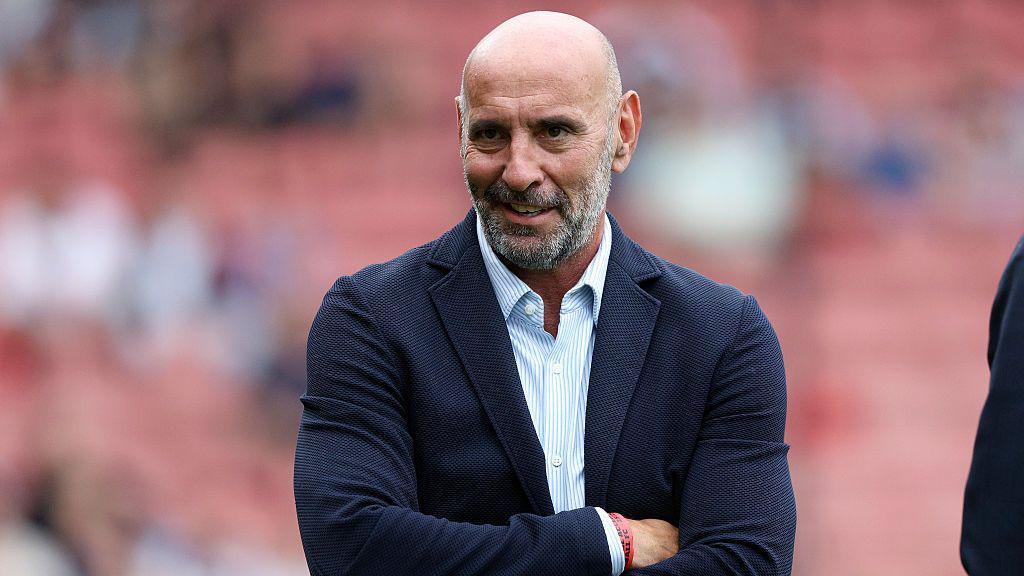
Espanyol sporting director Monchi has urged Spanish clubs to take a much closer look at the Championship, arguing that England’s second tier is among the most undervalued talent pools in European football. The former goalkeeper, now 57, returned to Spain after two years as president of football operations at Aston Villa, having previously worked as sporting director at Sevilla and Roma, and described the division as one of the game’s ‘least understood’ competitions.
Speaking to BBC Sport, Monchi said the Championship now forms part of Espanyol’s broader recruitment strategy as the Barcelona club, founded in 1900 and one of the oldest in Spain, finished 11th in La Liga last season and searches for ways to compete within Spain’s financial constraints. The club’s ownership group, led by Alan Pace, also controls Burnley, giving Monchi a direct window into the second tier.
‘I think the Championship is one of the least understood competitions,’ he said. ‘Having lived in England for two years and worked with Aston Villa, and now continuing to follow the competition because of Burnley, I can say that there are some very good players there.’
Monchi, aged 57, pointed to Morgan Rogers as a prime example of the talent on offer. Rogers moved from Middlesbrough to Aston Villa in 2024, became an England international, and then completed a £117m transfer to Chelsea this summer. ‘That is just one example, but I could give many more,’ Monchi said. ‘I think it is a competition with an extremely high level of competitiveness, very good coaches and intense demands. It is an excellent place to discover talent.’
Espanyol have already acted on that belief. Tyrhys Dolan arrived from Blackburn Rovers in July 2025 after five seasons in the second tier, while the Spanish club recently signed Netherlands international Quilindschy Hartman on loan from Burnley.
For Espanyol, the Championship represents more than a scouting opportunity. La Liga’s squad cost limits leave Spanish clubs at a financial disadvantage compared with Premier League sides, so Monchi argues that imaginative recruitment is essential. ‘We cannot do everything we would like to do, but we do what we can,’ he said. ‘It is true that we are at a disadvantage compared with some Spanish clubs, and particularly compared with clubs in England, Italy or Germany. However, we have to be imaginative, work hard and look for alternatives.’
The link between Espanyol and Burnley has kept Monchi closely connected to the English game. ‘I cannot avoid keeping an eye on the UK,’ he said. His time at Aston Villa also reshaped his view of how a modern football club should operate. He praised Villa’s clear separation between business and sporting operations and the strong connections among ownership, staff and supporters. ‘There was a very clear distinction between the business side and the sporting side,’ he said. ‘There was very good synergy throughout the club, a strong relationship with the ownership and a close connection with the fans. That does not mean applying everything in exactly the same way [at Espanyol], but they are valuable experiences.’
His most memorable moment in England came during the 2023-24 season, when Villa secured Champions League qualification after around four decades away from Europe’s top competition. ‘After 40 or so years without playing in the Champions League, securing qualification was a beautiful moment,’ he said. Villa also reached the Conference League semifinals that season, and the FA Cup semifinals and Champions League quarterfinals in his second campaign.
On recruitment, Monchi said data and artificial intelligence have fundamentally changed the job. ‘We no longer rely solely on scouting reports and subjective assessments, but also on the support provided by big data, artificial intelligence and data analysis in general,’ he said. ‘All clubs have done, and what I have done personally, is adapt to new technologies.’ For Espanyol, that means combining data driven methods with market knowledge from Spain, Italy and England. The aim is not simply to find cheap players but to improve competitiveness and narrow the financial gap with richer rivals.
Monchi rejected the idea that Espanyol should measure themselves against city rivals Barcelona. ‘Espanyol have to focus on themselves,’ he said. ‘Barcelona are a major club and an important team, but I do not think Espanyol’s growth should be measured against Barcelona. Espanyol’s reference point has to be Espanyol itself.’ He pointed to the club’s past as a guide. ‘Espanyol have enough history and enough of a past for us to look back at what the club has been and try to become that Espanyol again,’ he said. ‘An Espanyol that was one of the most important clubs in Spain. That is where we have to aim to return.’ Beneath that cautious short term approach is a clear belief that Espanyol can eventually compete much higher up La Liga.
The immediate target is more modest: improve on last season’s 11th place finish and consolidate the project. ‘The ambition is to improve on last season’s league position and continue progressing, moving forward one step at a time and consolidating the project,’ Monchi said. If the Championship keeps producing overlooked talent, that competition could become a vital part of Espanyol’s route back to prominence.