
Ukrainian forces struck the Progress rocket manufacturing plant in Samara with FP-5 Flamingo missiles, President Volodymyr Zelenskyy announced on X, drawing attention to possible damage at the main production site for Russia’s Soyuz-2 launch vehicle.
Zelenskyy described the Progress Center, a Roscosmos enterprise involved in electronics production, as one of the key facilities hit. “In Russia’s Samara region, one of the key enterprises within Roscosmos, the Progress Center, which was involved, among other things, in electronics production, was hit,” he wrote. “Flamingo missiles were used. A good achievement.”
Samara, the largest city in Samara Oblast, lies roughly 900 kilometers from the Ukrainian border. It is home to Russia’s most important rocket manufacturer. The Progress center assembles the Soyuz-2 vehicle, the workhorse of Russia’s fleet, as well as the newer Soyuz-5 rocket. The facility also builds military satellites.
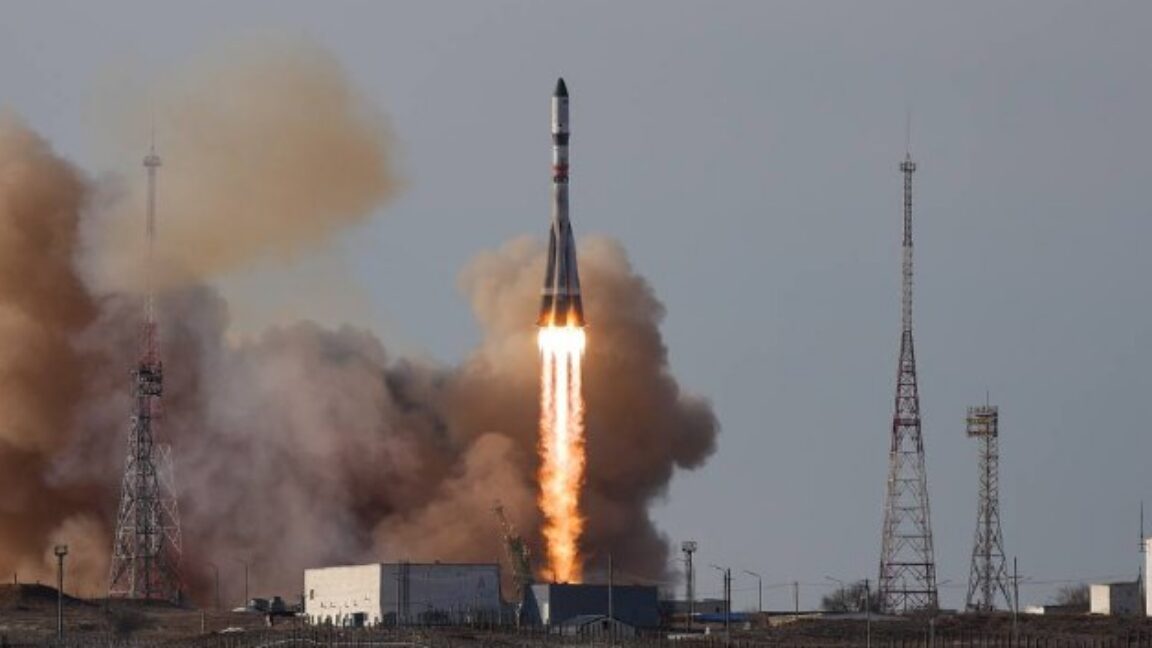
With a lift capacity of about 8 metric tons to low Earth orbit, the Soyuz-2 serves a mix of civil and military missions. It is the primary rocket used for launching Russia’s human spacecraft to the International Space Station.
It was not immediately clear which sections of the sprawling Progress complex were damaged. Some open source reports indicated a missile struck a building housing a clean room for avionics, possibly the electronics production area Zelenskyy mentioned.
Ukraine used FP-5 Flamingo missiles for the attack. The FP designation stands for Fire Point, the defense group based in Ukraine that developed the missile. The weapon has a range of several thousand kilometers. It has been used previously against energy infrastructure, military production facilities, and other strategic targets. While it seems unlikely Ukraine sought to hit Russia’s civilian space infrastructure, the country’s civil and military space efforts are closely aligned.
Any lasting damage to Soyuz rocket production would be crippling for Russia’s space programs. Of more than 120 Russian rocket launches since 2020, over 85 percent used the Soyuz-2 family. The Soyuz-2 has become the country’s key launch vehicle as the Proton booster ages out and the newer Angara rockets have been slow to reach a useful launch cadence.
Even before the attack, Russian space officials said demand for Soyuz rockets was exceeding production capacity, according to Russian Space Web. For the period from 2027 to 2030, demand ran between 30 and 50 percent higher than capacity.
The full extent of the damage remains unclear, but any significant disruption at Progress could affect Russian launch schedules and military satellite production alike.


